
NAU Students on the Land
from the Fall/Winter 2025 issue of Ground Truth
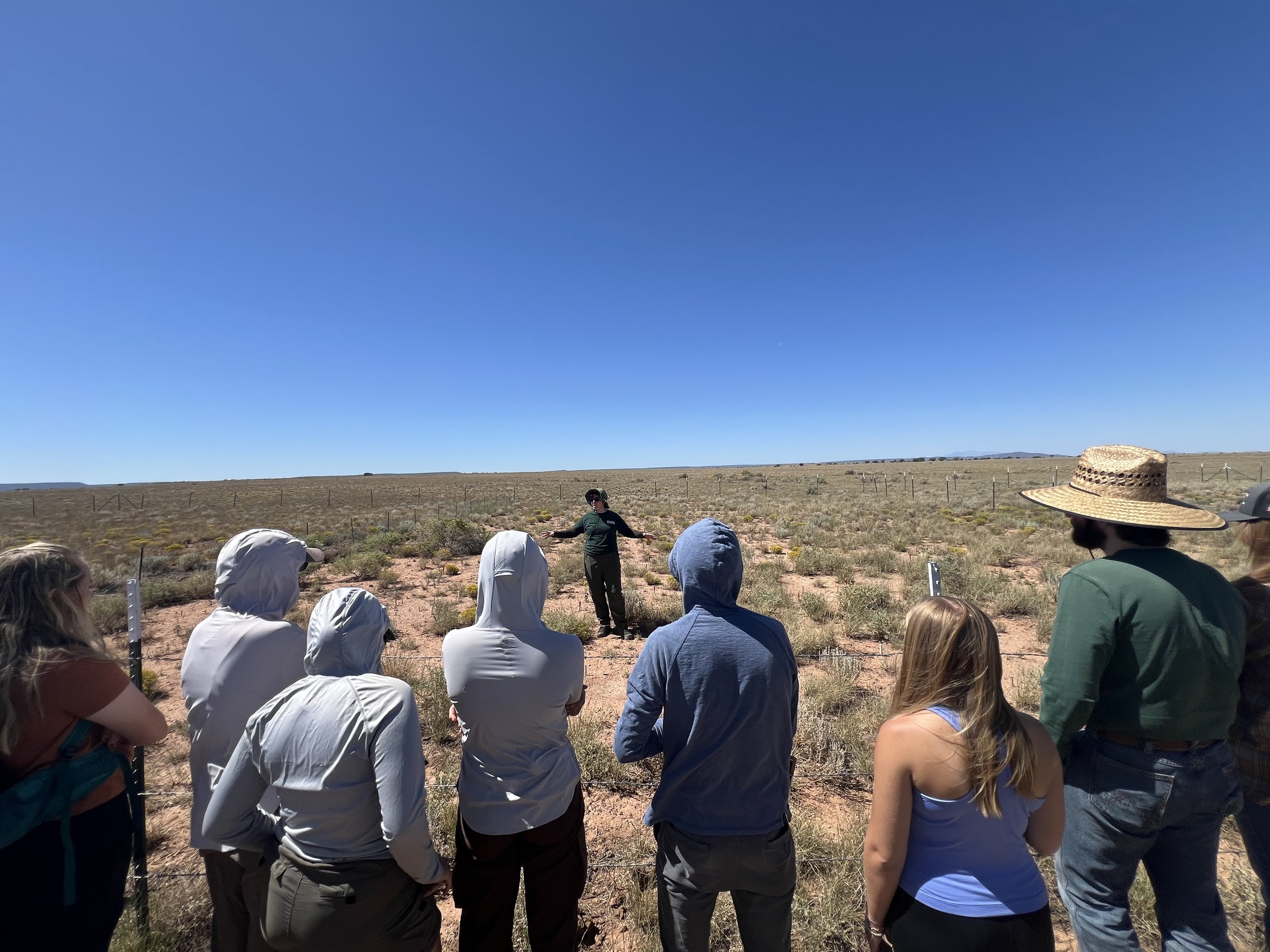
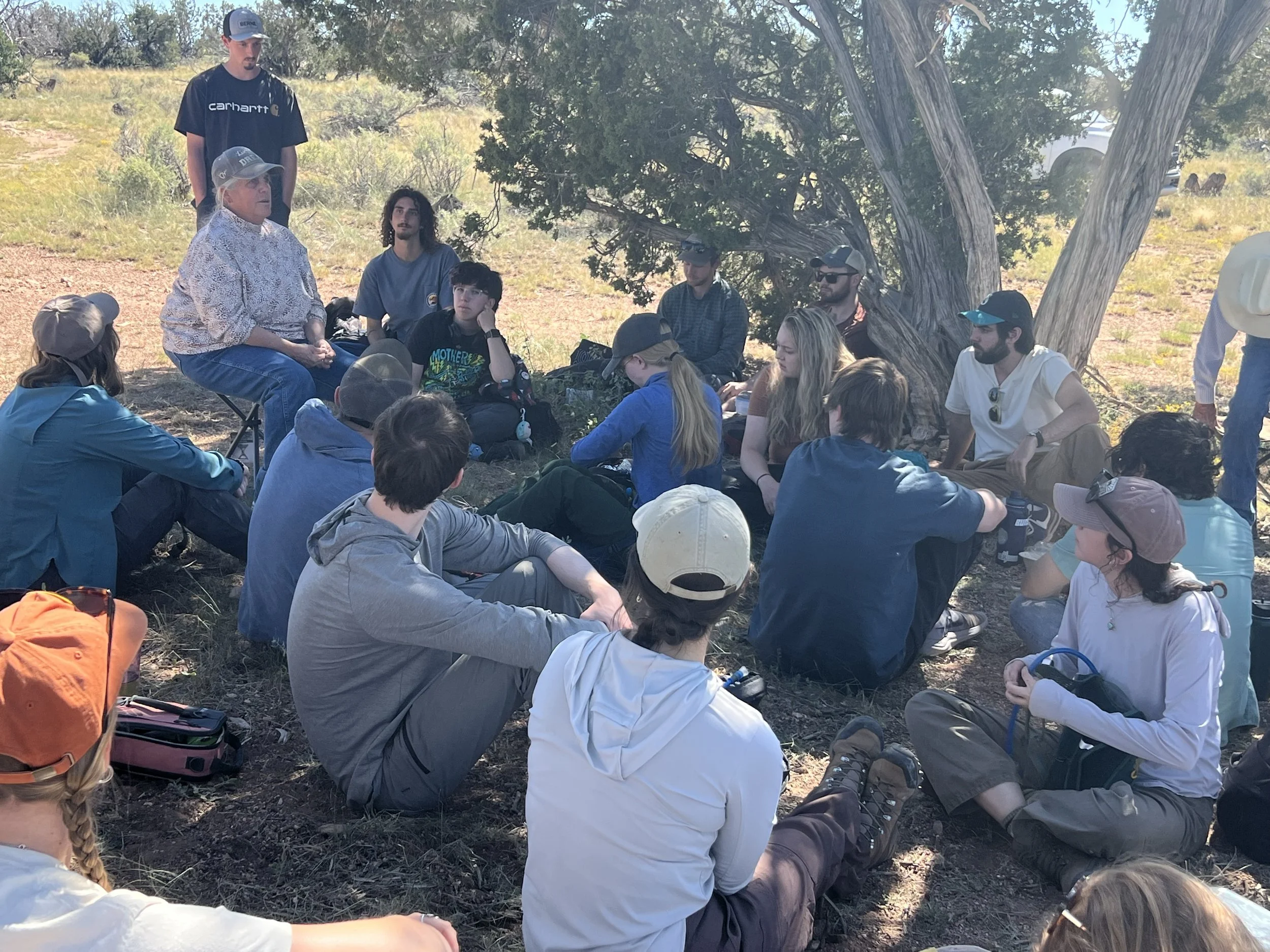
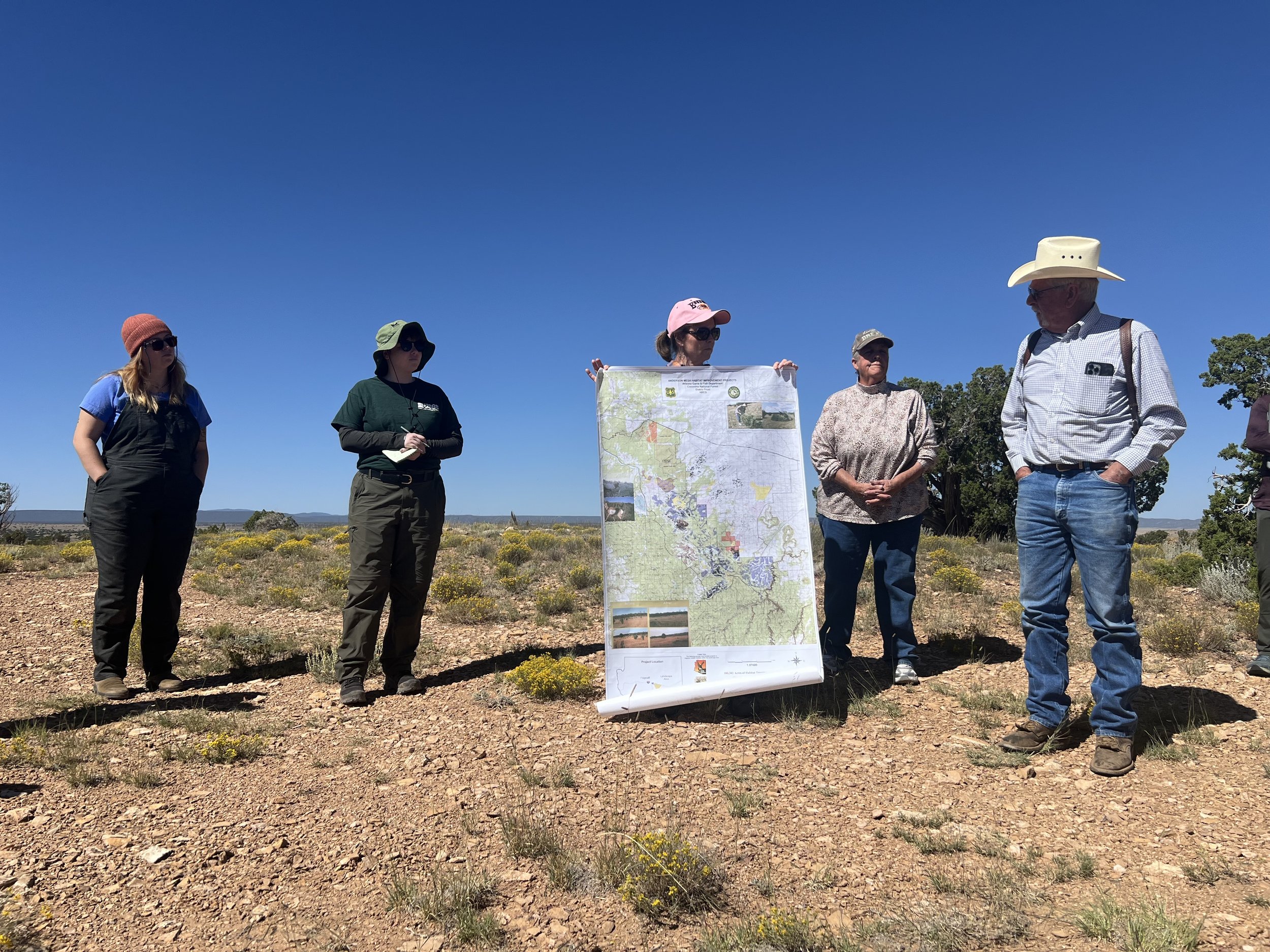
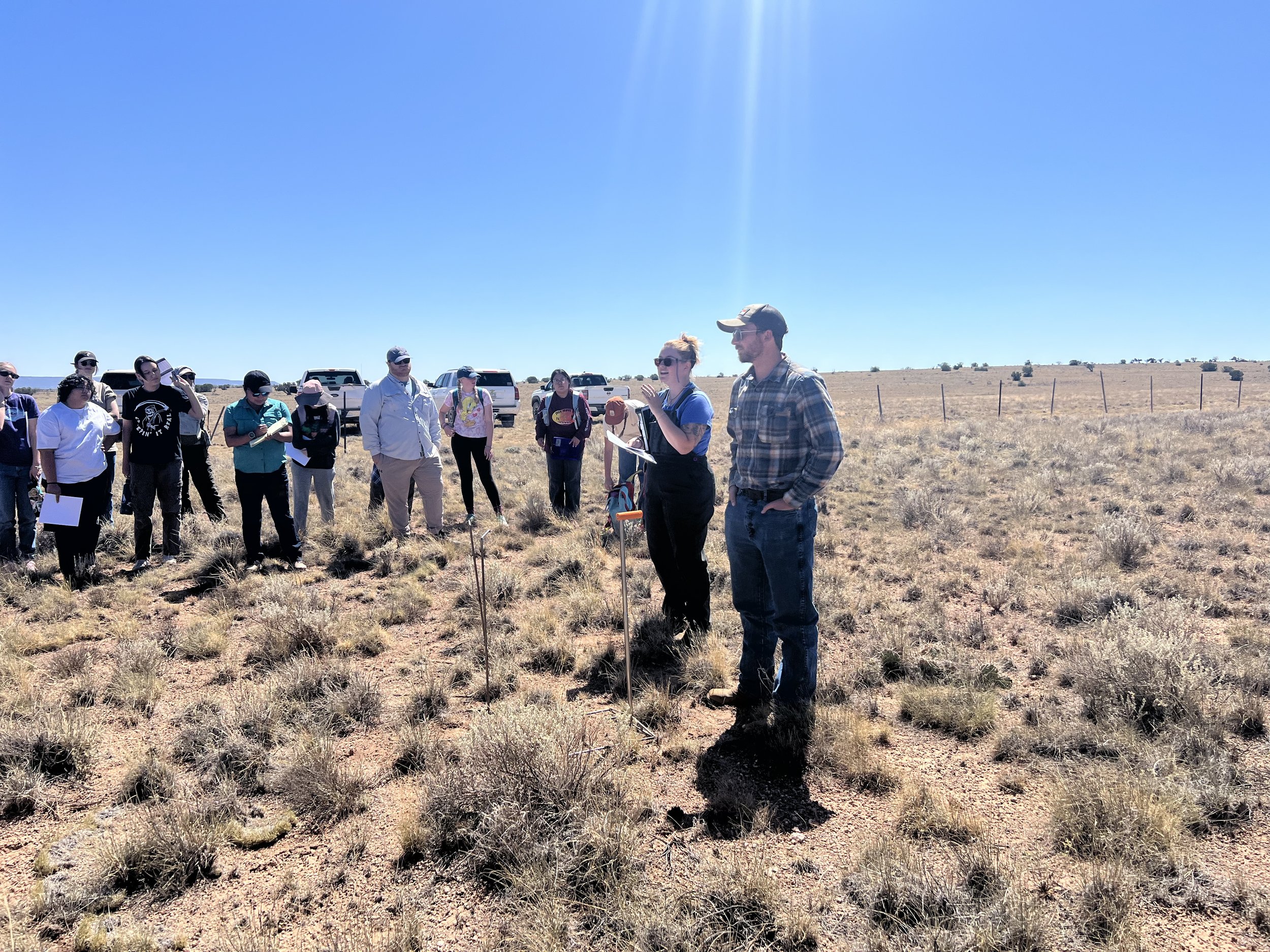
This fall, we had the pleasure of hosting students from NAU’s Conservation Biology course, taught by Dr. Clare Aslan, for a hands-on field trip across the Bar T Bar and Flying M Ranches. Students explored a variety of land management practices, including brush treatments, erosion control projects, grazing strategies, and an exclosure site where they compared on-the-ground conditions under grazed and ungrazed treatments. They also learned about Integrated Monitoring for Sustainability, the protocol used by Diablo Trust ranches to track ecosystem health and guide adaptive management, and the ongoing RestoreNet trials happening with the US Geological Survey (USGS). A huge thank you to our partners, Laura Shriver (USGS Southwest Biological Center) and Emma Sautter and Caleb Miller (UA Cooperative Extension), for joining us in the field and sharing their expertise.
Student Reflections
“This field trip really helped me understand that ranching is not the only way these lands are being used. Native wildlife also depend on the land. Ranch managers are faced with the task of running a business and maintaining the land in a way that is sustainable for native ecosystem health and future biodiversity.” — Ben
“It’s important to sustainably manage these lands to maintain the biodiversity of wildlife. These ranchers do so much to maintain the land for their cattle and also the deer, birds, and rabbits that are native to the area. Specifically, they make sure to keep water accessible by keeping natural watersheds flowing and preventing erosion.” — Sarah
“A common topic the ranchers discussed was learning as they go. Long-term monitoring from this area or similar ranches allows them to test different strategies and ideas. Switching from chaining to nipping/grinding, for example, represents a shift in strategies based on scientific observation.” — Logan
“I thought it was impressive how the Diablo Trust integrates science directly into its collaborative stewardship model by relying on monitoring, experimental trials, and partnerships with agencies and researchers.” — Michelle
“The ranchers in the Diablo Trust own and use some of the most important undeveloped land in Arizona, meaning they play a critical role in conservation. Through sustainable management techniques, ranchers can ensure more habitat and a healthier ecosystem for wildlife and native plants in Northern Arizona.” — Brooke
“The field trip was an excellent opportunity to talk to the Diablo Trust ranchers and learn about juniper chaining, grazing exclosures, and native plant restoration projects with other industry professionals. It was a beautiful day to enjoy northern Arizona grasslands.” — Delana
This field trip reflected what’s at the heart of our work: bringing people onto the land to learn about the connection between working ranches and conservation. We're looking forward to meeting more students next year!