
In 2005, Jack Metzger told an interviewer that our future on this planet would be "a cultivated one." He meant that the land would have to keep feeding, housing and clothing people, and that the way to do it was through renewable, actively managed systems, "basically by using what it gives us."
John H. "Jack" Metzger was a fourth-generation northern Arizona rancher. He was also one of the founding members of the Diablo Trust in 1993. He died May 17, 2026, in Vero Beach, Florida, at age 77. Jack was born in Tucson on July 8, 1948, but spent most of his life in northern Arizona. He graduated from Flagstaff High School in 1966, attended Prescott College, and earned a B.S. in animal science from the University of Arizona, where he was a proud member and officer of the Aggie House. He worked alongside his parents and his sisters, Kit Metzger and Diana Kessler, to run the family's Flying M Ranch southeast of Flagstaff, which stretches from east of Mormon Lake down to Canyon Diablo.
As the Diablo Trust looks back on the legacy of its founders, this piece draws on Jack's obituary and on an oral history he recorded on October 7, 2005, with Norm Lowe at Northern Arizona University's Cline Library. Wherever we could, we've let Jack speak for himself.
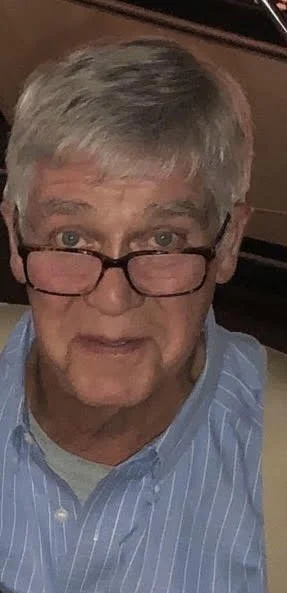
“Classic Jack”, photo provided by Mandy Metzger
“Outspoken. Strong-minded . A natural leader when focused on that in which he believed. For more than three decades, Jack Metzger constantly amazed me with his bright intellect, sharp wit, and spirit of adventure. He valued family, the land, and his country. When his health demanded a slower pace, Jack did not know how to do ‘slow ranch’ and moved from the high desert plains and the land he loved to a welcoming community near the ocean. There he talked to nearly anyone, who would listen, about the importance of agriculture, productivity and a purposeful education. And there, after studying coastal weather and local marine life, Jack decided to take up boating. He said, obviously, captaining a boat was very similar to running a road grader. He quickly learned there were considerable differences, but was not deterred. And when Jack peacefully passed, he was sitting in a chair under the Florida sun facing the boat and likely wondering how things were faring in Arizona and on the Flying M.”
-Mandy Metzger
Rooted east of Mormon Lake
The Metzgers came to northern Arizona in two branches. One traced back to New England, where, as Jack told it, his ancestors had rotated grazing on their pastures since the 1600s. His great-grandfather was a ship's fitter from Maine, and the family came west because a family member had tuberculosis and Arizona was "the great cure-all." On the stagecoach up to Phoenix they were robbed, and kept their belongings only because a fellow passenger tucked everyone's valuables down the front of her dress.
The desert heat drove them north to Flagstaff. Jack's great-grandfather worked in the sawmills, grading lumber, but the family's real goal was "to get back on the land." They rented and bought ground, ran "a little bunch of cows," and by about the turn of the century had settled near Mormon Lake.
The other branch came from Germany by way of Ohio. Jack's grandfather bought a horse and rode west until it gave out near St. Louis, then took the train and arrived in Cheyenne during Frontier Days at the age of thirteen. "I honestly think that was his first encounter with alcohol and rodeo," Jack said, "and he liked both." He rodeoed across the West before settling around Flagstaff around 1906 to 1908.
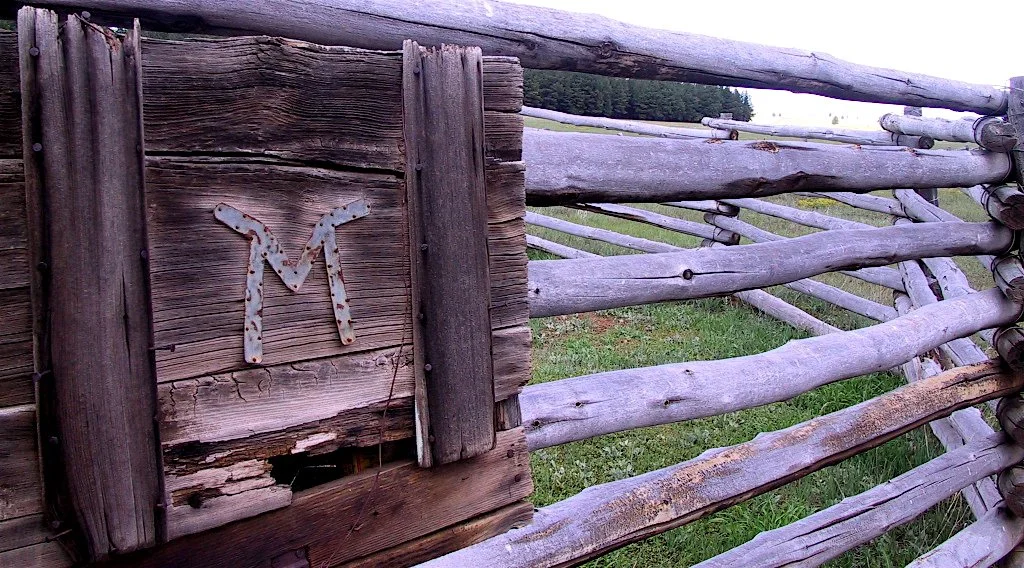
Together the families homesteaded, dry-farmed timothy and oats for the timber industry's draft horses, and pieced homesteads together with no outside money. The Flying M took roughly its present shape in 1967: about 90,000 acres reaching from ponderosa pine above 8,000 feet down to shortgrass prairie near Canyon Diablo at 5,400 feet, with around 30 inches of precipitation at the top and as little as three at the bottom. Jack's father, Herb Metzger, ran the ranch before Jack and his sisters.
Learning a dry country
Jack never claimed his family was more innovative than its neighbors. Everyone who came west, he said, brought farming knowledge from a wetter climate, and it didn't work here. "Those who didn't choose to learn or change disappeared very quickly." The Metzgers learned, by trial, error and close observation.
As a boy in the 1950s, Jack walked "a million miles with the old crank seeders," broadcasting seed over old homestead fields that the Homestead Act had forced people to plow. Then they brought in sheep to work the seed into the ground. The quick-growing grasses served as a nurse crop, and within five or six years the natives had taken over. He also remembered the last wheat threshed on the ranch, in 1952, on an old thresher run by a Fordson tractor.
By 2005, the Metzgers' grazing was a disciplined system. The Diablo Trust ranches were divided into six ecological zones, each with a desire plant community. Cattle stayed on a pasture no more than about 14 days in the growing season, sometimes only once a year. They rotated the herd's highest-energy needs, such as lactation and breeding, around the ranch so no piece of ground carried the same burden year after year. Every pasture had a number in a database that tracked acreage, head count, season, duration and which plants were grazed. "We cannot favor the animals over the plants and survive very long," he said.
The results showed on the ground. Draws that in the 1960s were gullies deep enough to ride a horse along at eye level with the soil surface had, by 2005, rounded over to about two feet deep, with a full perennial plant community in the bottom. Part of that change came from adjusting the timing of grazing. Part came from using cattle as a tool, to "do what you could do with a bulldozer, but do it with a bunch of cows." With the Bar T Bar, the Metzgers also built a shared breeding program, selecting females from both herds for a small, efficient cow suited to country where buying feed isn't an option. Both ranches ran calf crops in the high 90 percents.
1993: A desperate cry, and an invitation
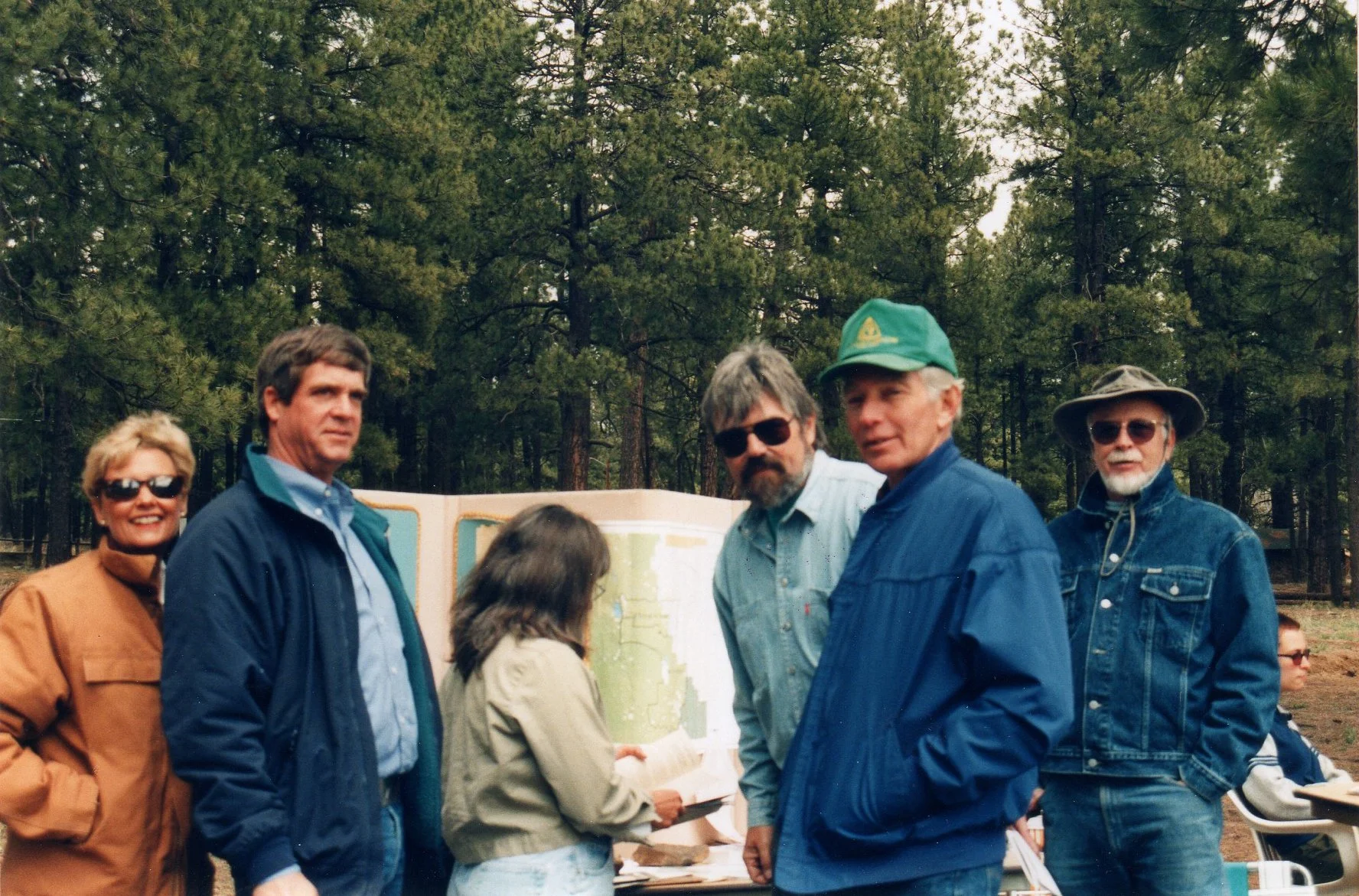
By the early 1990s, Jack saw the land and the people who managed it caught in gridlock. "Everybody's in court, and it's just a giant conflict," he recalled. So in 1993 the Flying M and the Prosser family's Bar T Bar Ranch went to the community. Jack called it "kind of a desperate cry by two ranches." Their question was simple: "What do you want on the land? Is there some common ground there? Can we have a future here that works for everyone?"
The answer became the Diablo Trust. The Metzgers' vision was adaptive: set goals for the land, monitor them, and when things drift off course, "replan and go again." He was candid that agency rules often didn't allow that kind of flexibility. He hoped groups like Diablo Trust, working with universities and agencies, would one day be empowered to carry out community-based stewardship on the ground.
He spoke warmly of the people Diablo Trust brought together. "We've met some wonderful people, truly wonderful people, some who we literally thought were blood enemies, who have become friends," he said. He believed a shared base of information was the only road to sound stewardship, "because it's got to be the people who are affected, to be the stewards."
Jack wasn't the only Metzger at the table. His sisters also founded the organization, and his wife, Mandy Metzger, served as president of the Diablo Trust for many years and was vital to much of its early success.
That approach produced real work. By 2005, Diablo Trust was contemplating grassland and wildlife-habitat treatments on 70,000 to 75,000 acres of state, private and national forest land, had already treated close to 20,000 acres, and was using Arizona Game and Fish design standards. The aim was to bring back grasslands and winter browse lost to juniper encroachment while keeping the old-growth trees. Jack's hope was personal, too. The springs he drank from as a kid riding the ranch had been dry for 20 or 30 years, and he wanted to see them run again.
A cultivated future
Jack worried that most Americans were now "three or four or even five generations away from the land," and had lost the understanding that everything we eat, wear and use comes from it. "Tomatoes don't just fall out of the sky," he said. "Some poor guy has to plant a tomato seed."
He pressed for a clear line between needs and wants. Recreation on public land was fine, he said, but a society that piled its desires onto the land first would "lose the ability to manage for sustainable flows of products." He disliked the word "restoration" ("Restoring to what? If you go back 15,000 years, we had a glacier here") and preferred a goal-directed plan for the land. He reminded scientists and policymakers that "normal" in this country is a very broad range, and that the last ten years might sit at one far end of it.
His closing words in the oral history are the heart of his legacy. With the world's population growing, every productive acre would have to keep producing, he argued, and the most durable way to do that was through renewable biological systems that are diverse, and therefore stable. "Our future on this planet is a cultivated one," he said. "It's an active thing that we have our hands in."
The man behind the ideas
Jack's humor comes through in the interview. He teased modern hunters for their one-ton trucks, ATVs and full camouflage, and suspected they did most of their sneaking around in bars. He remembered when the roads were quiet enough that he could tell who was driving by the sound of the engine. In one conversation he could move from where ancient peoples chose to site their villages to John Wesley Powell's case for 5,000-acre homesteads to juniper roots found 600 feet down a well.
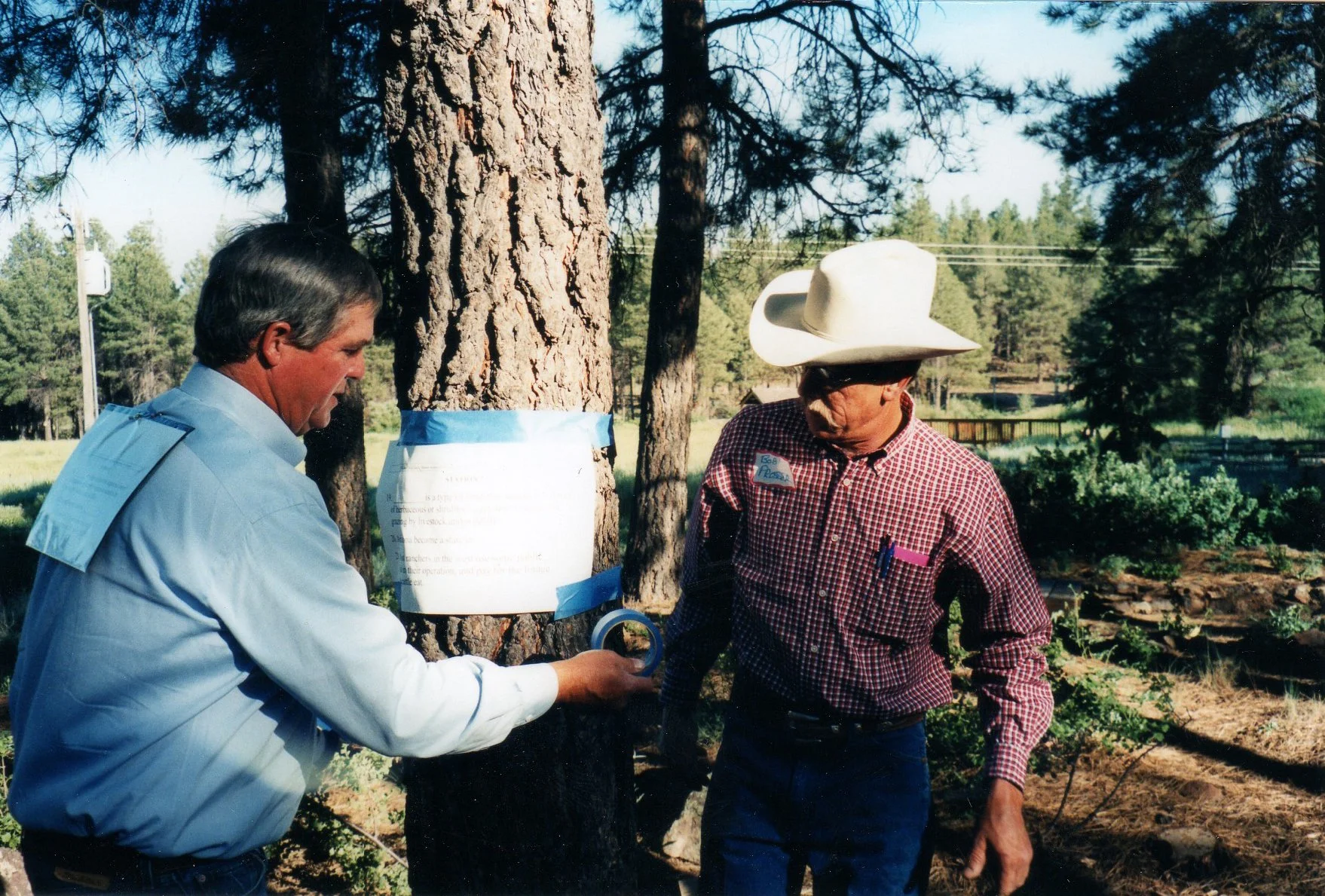
He also showed up. As recreation grew, so did rollover accidents and emergencies on the land, and the ranch did a lot of search and rescue. "Don't have much choice," he said. He welcomed school and college groups onto the land again and again, even when their questions dismayed him, because he believed the answer was more time on the land, not less. With fellow Diablo Trust partners Norm Lowe and Dan Dagget, Jack also performed an educational skit about how ranchers, agencies and environmental organizations can come together to support collaborative stewardship of our rangelands. The skit was recorded on video, and for many years classrooms had the opportunity to engage with it.
Jack carried his convictions well beyond the ranch. He was a member and past president of the Arizona Cattle Growers' Association. He testified before Congress several times, both as chairman of the National Cattlemen's Association's Federal Lands Committee and as a member of the Public Lands Council's executive board. Passionate about working landscapes, he spoke often on behalf of ranchers in Arizona and across the West. He also served on the Museum of Northern Arizona's Board of Trustees.
In 2017, Jack traded his cowboy hat for a skipper's cap. He and his wife, Mandy, began spending winters in Vero Beach, Florida, and returning to Flagstaff when the weather warmed. They found a welcoming community there and many adventures on their boat, including a trip to the Bahamas.
Jack is survived by his wife, Mandy Metzger; his daughter, Jan Lohman (Andrew), and his son, John W. "Will" Metzger, both of Phoenix; his son, Robert H. Metzger of Westminster, Colorado; and his sisters, Diana Kessler (Alan) and Kathryn "Kit" Metzger, both of Flagstaff. He is also survived by Mandy's children, Michael Rankin (Colleen) of Arvada, Colorado, Kelly Rankin (Cindy) of Cheyenne, Wyoming, and Emily Rankin (Dan) of Jackson, Wyoming, and their families.
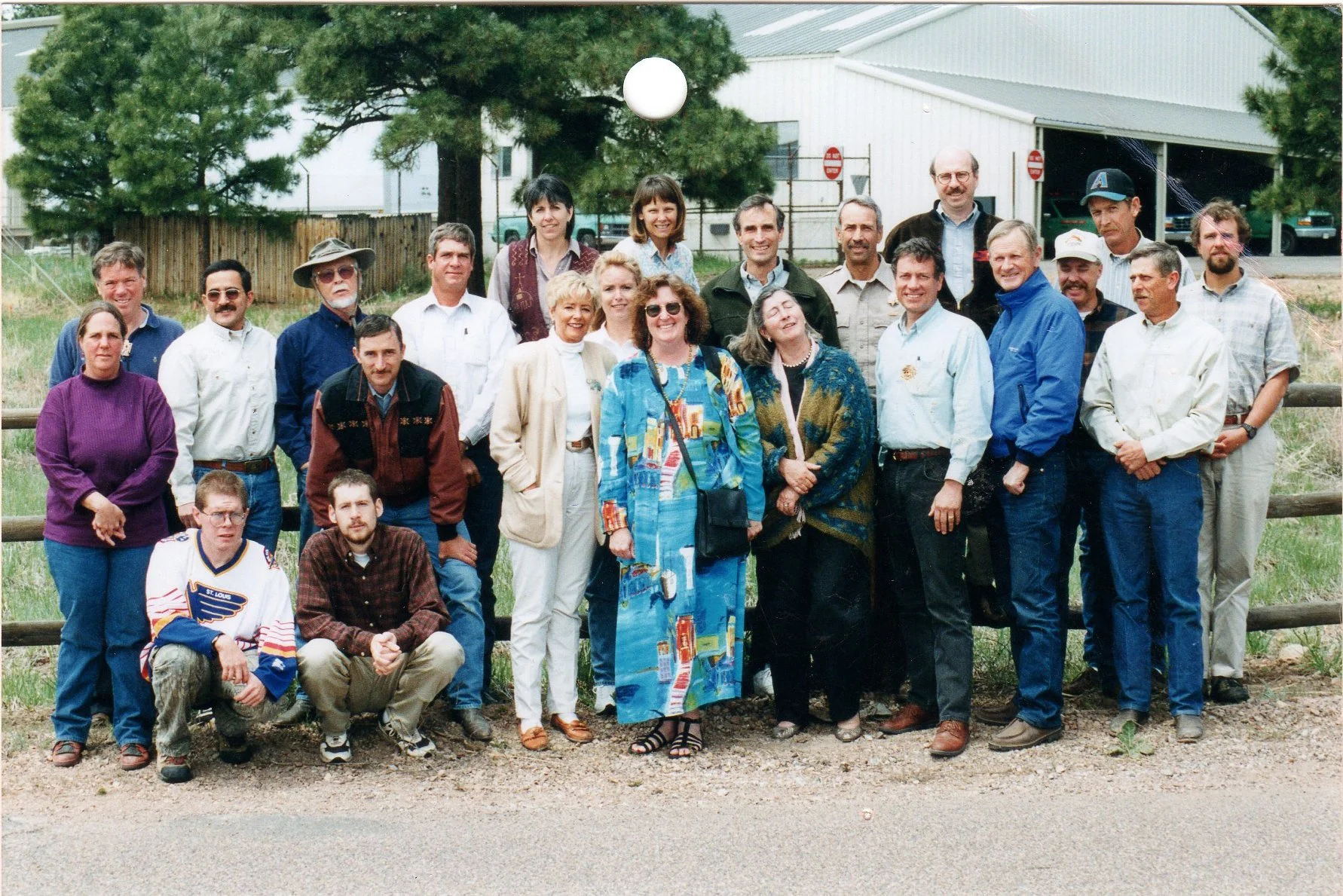
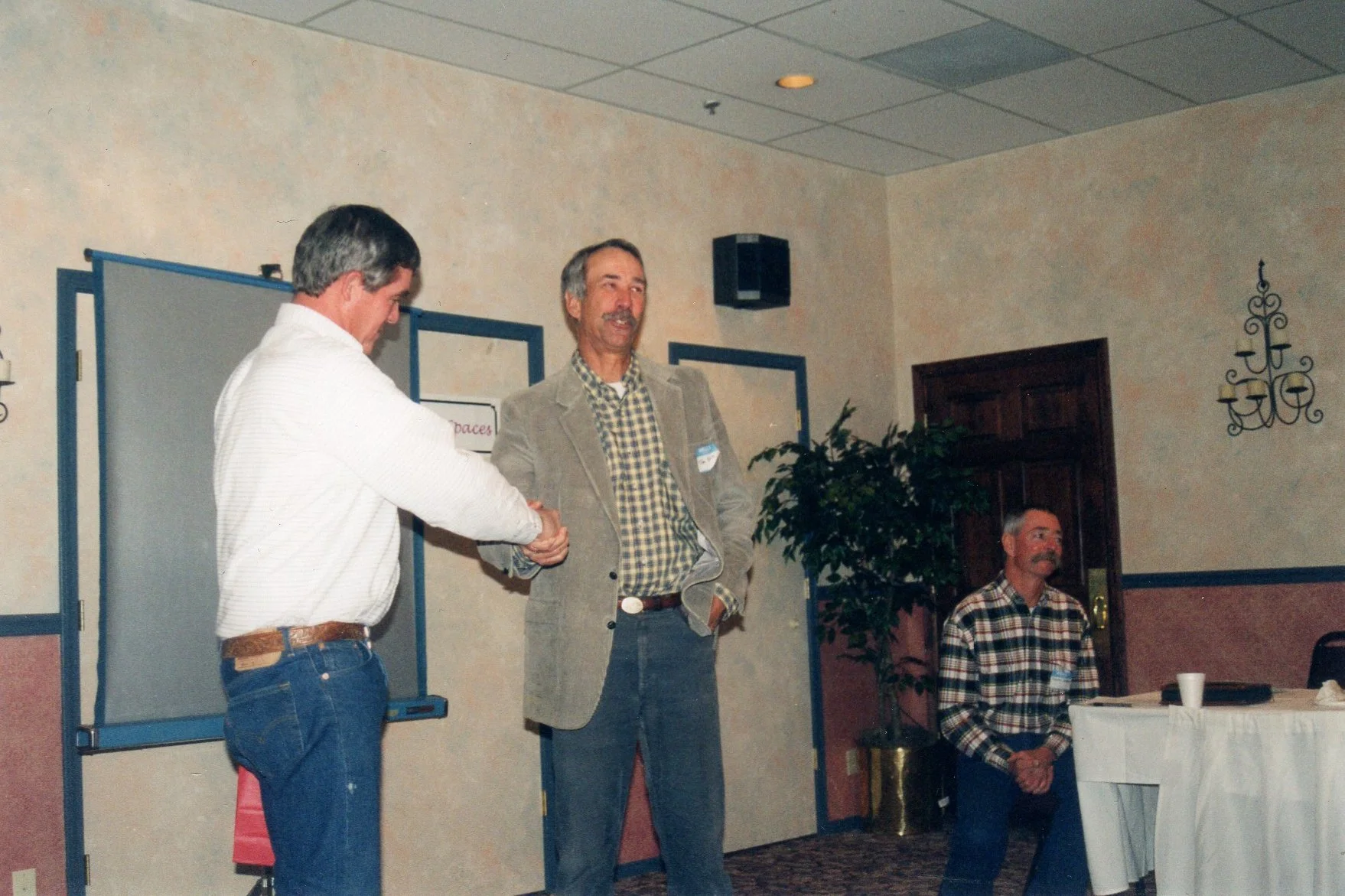
Carrying it forward
More than three decades after two ranching families asked their neighbors what they wanted from the land, the Diablo Trust still works on the questions Jack posed. How do we keep working ranches whole? How do we stabilize the draws, bring back the grasslands, and get the springs running again? How do we bring ranchers, agencies, scientists and the public to the same table? The monitoring, the plan-and-replan cycle, the willingness to sit down with former adversaries: those are Jack's fingerprints. On August 16, right after the Diablo Trust Annual Campout, the Metzgers and the Diablo Trust community gathered at Ashurst Run on the Flying M Ranch to celebrate his life.
“Jack was a fierce, outspoken, passionate defender of the ranching life. And he respected all whom valued wildlife, and worked to see it protected and nature preserved. He was a good friend and an honest man.”
“I stand here today and tell you that because of Jack’s efforts and leadership, and tenacity and wisdom across public lands, he made an impact that we’ll all remember.”
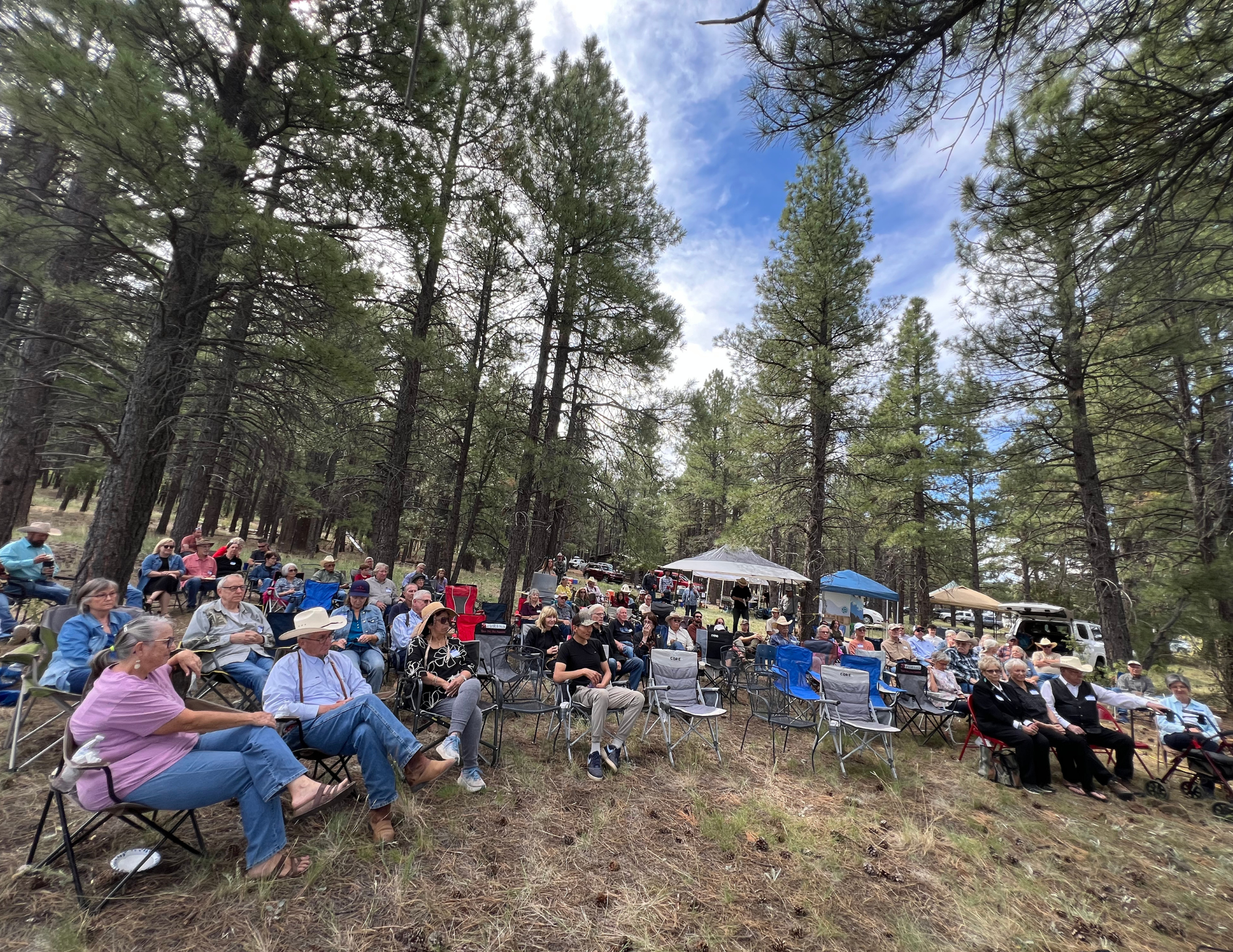
His final invitation in 2005 still stands. He wanted people to come to the land, not for two weeks in summer but for a couple of years, to "freeze your you-know-what off in January" and see it every day. That, he said, is how you gain "the humility you need to recognize that we're just a tiny part of this thing, but that we can control our destiny in it, basically by using what it gives us."
Thank you, Jack.
Read more
Jack Metzger oral history interview, interviewed by Norm Lowe, October 7, 2005. Ecological Oral Histories project, Cline Library Special Collections and Archives, Northern Arizona University (NAU.OH.2005.111.4).
John H. "Jack" Metzger obituary, Arizona Daily Sun, 2026.